Medically reviewed by Vernon F. Williams, MD. Last reviewed August 2026.
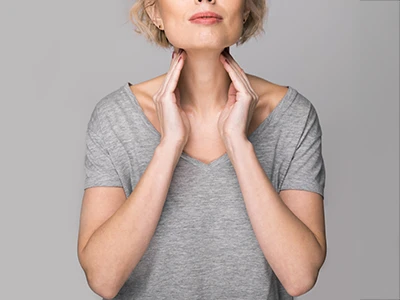
Gaining weight? Cold hands and feet? Constipated? Thinning hair and skin? Swollen thyroid gland (goiter)? Puffy, round face? Moving, thinking and speaking slower? Struggling with depression?
It is estimated that 14 million Americans suffer with these common symptoms of Hashimoto’s Disease. It is most prevalent in middle-aged women and runs in families. It is the most common form of hypothyroidism in the world, but it can be treated and managed successfully.
At Texas Institute of Longevity, Aesthetics & Sexual Health in San Antonio, TX, we offer the most up-to-date evaluation and treatment methods to effectively and safely address Hashimoto’s Disease so you can feel and perform normally again. If you are ready to see what our Hashimoto’s Disease Treatment regimen can do for you, call and speak with one of our specialists at (210) 985-1700 or contact us online today!
The thyroid is a small gland located just under your Adam’s apple. It is roughly the size and shape of a tiny butterfly. While small, it has a huge impact on your health. It produces hormones that play a role in every aspect of how your body functions, including your metabolism, energy levels, physical and mental wellness, and overall hormonal health.
Unlike other hormones, receptors for thyroid hormone are found in every one of your cells, regulating the function of every organ and every system in the human body. When your thyroid makes too little or too much of these essential hormones, you are considered to have thyroid disease.
Thyroid conditions can range from milder forms of thyroiditis to end-stage thyroid cancer. Thyroiditis is a general term for inflammation of the thyroid gland. It can be caused by a number of different factors – ranging from autoimmune disease to trauma, infections or iodine deficiency.
Thyroiditis, over time, can cause either hypothyroidism (under function with too little thyroid hormone) and hyperthyroidism (over function with too much thyroid hormone). The particular type of thyroid condition it causes depends on the type of thyroiditis involved and the stage it is in. There are occasions where thyroiditis can at first cause hyperthyroidism then later hypothyroidism.
Both hyperthyroidism (over function) and hypothyroidism (under function) of the thyroid gland impact the overall function of your entire endocrine system. The majority of thyroid patients experience hypothyroidism — too little hormone production — while a small percentage suffer from Hyperthyroidism, or too much.
Hashimoto's Disease is a chronic autoimmune disease that affects your thyroid gland. It typically develops when your body produces antibodies that attack the cells in your thyroid, causing it to produce too little thyroid hormone. Because the immune system attacks and destroys thyroid tissue, the thyroid is less and less able to produce the necessary hormones, leading to a hypothyroid condition. While it can occasionally cause initial temporary overactivity – referred to as hashitoxicosis – it almost always leads to a chronically underactive thyroid.
Hashimoto’s is the most common form of hypothyrodism. It is also the most common cause of hypothyroidism in iodine-rich countries like the United States.
The precise cause of Hashimoto’s Disease is not completely understood. Although anyone can develop Hashimoto's disease, certain risk factors increase its incidence:
Age: Hashimoto’s can strike at any age but becomes more prevalent with age. It is most common in middle-aged women (30-50).
Gender: Women are seven times more likely than men to develop Hashimoto’s.
Genetics: A family history of autoimmune or thyroid disease increases risk.
Thyroid Injury: Any physical, chemical or radiation injury to the thyroid can trigger the autoimmune response at the root of Hashimoto’s.
Other Autoimmune Diseases: Having other autoimmune conditions (e.g., rheumatoid arthritis, lupus, type 1 diabetes, etc.) raises risk.
Pregnancy: Hormonal shifts during and after pregnancy can trigger Hashimoto’s. Also, during pregnancy, it is especially important to pay attention to the symptoms, as Hashimoto’s is known to cause miscarriage or birth defects. High cholesterol is a common symptom seen in pregnant women who develop Hashimoto’s Disease during pregnancy.
Iodine Intake: Excessive iodine can trigger Hashimoto’s in susceptible individuals. Iodine deficiency can cause other hypothyroid conditions and particularly goiter, but excess iodine consumption from seaweed, high-dose supplements or iodized medications can trigger the development of autoimmune thyroid disease, cause thyroid inflammation, and raise antithyroid antibody levels.
Environmental: Exposure to radiation (e.g., medical treatments, nuclear accidents) is a risk factor, as are smoking, exposure to second-hand smoke, and other environmental pollutants.
Stress: High stress levels are linked to increased risk.
Sleep: Chronic lack of sleep or sleep deprivation can play a role.
Poor Nutrition: Nutritional deficiencies and a low-calorie diet may be factors.
Bacterial Infections: Some infections might trigger the autoimmune response.
Certain Medications: Some drugs can increase risk.
Hashimoto's Disease develops slowly and often causes no symptoms at all early on. Goiter, the enlargement of the thyroid gland, is one of the visible symptoms that can develop. It can cause discomfort, as well as difficulty swallowing or even breathing. As more symptoms develop, they will vary among individuals but typically include:
Hashimoto’s Disease is generally diagnosed through blood tests to measure thyroid function and detect antibodies. A physical exam is needed to check for goiter (enlarged thyroid). Taking a full medical history is essential. Key testing checks for:
We also may conduct testing to rule other medical conditions that present with similar symptoms. We recommend that you compile a list of symptoms prior to your first consultation.
There are many factors contributing to your thyroid health and any symptoms you may have developed. Your experience of thyroid disease is unique, so our approach to addressing your thyroid condition will be comprehensive and thorough – and always individualized.
The underlying cause of your hypothyroid condition must be addressed and repaired – whether that involves treating adrenal fatigue, autoimmune disease like Hashimoto’s, yeast overgrowth or leaky gut. Once we have determined that the autoimmune disease Hashimoto’s is at play, this will guide our treatment approach.
We offer a functional and integrative medicine approach with bioidentical hormone replacement therapy (BHRT) as a treatment option. BHRT can help manage symptoms of Hashimoto’s thyroiditis, such as fatigue, weight gain, and brain fog, by optimizing hormone levels that are often imbalanced. While traditional medication like levothyroxine treats the underactive thyroid, BHRT focuses on balancing broader metabolic and hormonal issues, along with emotional well-being.
BHRT is a customizable treatment that utilizes hormones identical to those your body produces naturally and can be tailored to your individual needs, unlike some conventional treatments that focus only on T4. BHRT is effective not only in reducing symptoms and balancing hormones, but in supporting adrenal function.
Nutritional and lifestyle changes are generally incorporated too, alongside stress management and other approaches. We offer the full range of treatment methods available for Hashimoto’s Disease, incorporating first the most natural, effective methods that offer the fewest side effects.
With a personalized treatment plan, your physical and mental condition could be profoundly improved, providing:
At Texas Institute of Longevity, Aesthetics & Sexual Health, we recognize that each individual requires a treatment regimen customized specifically in line with the overall health profile and specific symptoms the patient is encountering.
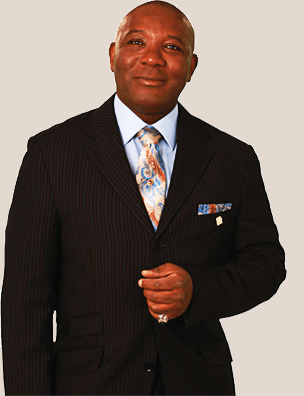
Dr. Williams is a highly trained functional medicine physician who specializes in innovative approaches for optimal health and longevity, including regenerative medicine, aesthetics, sexual health and longevity medicine.
Dr. Williams has a bachelor’s degree in biology from Harvard University and received his medical degree from the Albert Einstein College of Medicine. He serves as a Member of the Anti-Aging Group (AAG) Advisory Board. He also completed Physician Training and Certification in Age Management Medicine, jointly sponsored by The Cenegenics Education and Research Foundation (CERF) and the Foundation for Care Management (FCM).
Dr. Williams has extensive training in Lasers and Medical Spa procedures, and he is a Fellow of the American Society for Laser Medicine and Surgery (ASLMS). He is a Diplomat & Fellow, Board Certified, and an Oral Board Examiner of the American Academy of Anti-Aging, Regenerative & Functional Medicine (A4M), as well as an A4M Fellow of:
Dr. Williams is the author of the international bestseller “Grow Younger like Me: Be 29 Again and Again” and his new book, “Longevity Medicine: Secrets to Growing Younger.”
As well as his exceptional training and expertise, Dr. Williams brings over 30 years of experience and a record of successful patient outcomes. Learn more about his training and expertise in treating thyroid disease and other complex medical conditions.
If you have been searching for the most trusted functional medicine doctor in the San Antonio area, you don’t need to search any further. Everything you need is right here at Texas Institute of Longevity, Aesthetics & Sexual Health in the Stone Oak neighborhood, located in the Hollywood Park enclave of North San Antonio – and our track record with satisfied local patients speaks for itself.
Compile your symptoms checklist and call Texas Institute of Longevity, Aesthetics & Sexual Health at (210) 985-1700 or complete the form below.
Depending on the exact treatment used, Hashimoto’s Disease treatment results vary from patient to patient. Initial improvement in some symptoms could begin after the first several days but it may take weeks or even months to see full results. Best results are usually seen in the first three months.
We only incorporate treatment methods that are considered safe and effective with a proven track record.
Left untreated, Hashimoto’s Disease can impact your overall health and even lead to serious conditions like goiter or severe cardiovascular disease. That’s why regular screening with a physician experienced in treating both autoimmune and thyroid conditions is essential.

Dr. Williams and his Angels—Vanity, Rhonda, and Larissa—are nothing short of miracle workers. Their expertise is simply unmatched, blending the most advanced techniques with an artistic touch that creates a perfect harmony between science and beauty.
Lisa
Dr. Williams is truly a master at his craft. He takes a personalized & multi-pronged approach to total transformation. I can honestly say Dr. Williams has done wonders for my wife and I.
Ryan
I had a great time at The Wellness and Aesthetics Medical Center and Spa. The entire staff is very friendly and knowledgeable. They provide excellent customer service. I am very thankful for the excellent care Dr. Williams provides and the unique gift he is to all his patients.
Blanca
Texas Institute of Longevity, Aesthetics & Sexual Health
540 Oak Centre Dr, Suite 114
San Antonio, TX 78258
Phone: (210) 985-1700